
George Fox University’s New Speed Limit
Photos by Billie Throm
Article by Jayden Forsyth
NEWBERG, Ore. – The dismay George Fox University (GFU) students express over slow walkers on the paths in between classrooms, Canyon Commons and other locations on campus is well documented. This complaint is the topic of many exasperated Fizz posts (an underground form of student social media) and can be the reason why students are late to class.
For those who have been hindered by snail-paced steppers during their time at GFU, there is good news. During March 2026, the university ran a covert operation to target this problem, employing a variety of tactics in order to promote faster pedestrian transit across campus.
GFU’s most effective strategies involved a camera-mounted radar speed-detection gun, similar to those used by law enforcement. In the trees near Crisman Crossing bridge, several of these rigs were concealed, designed to catch foot-draggers in their tracks.
Anyone walking slower than three miles per hour was flagged, had their identity revealed by state of the art facial recognition technology and was sent a warning or fine via email. Reactions to this measure have been varied.
“I wasn’t even going that slow dude,” said junior Mortimer Leadfoot. “I got a fine of $20 for walking two and a half miles per hour.”
In support of this action taken by the school against sluggish pedestrians is sophomore Dash McSpeederson. “I’ve noticed that these speed-detecting things are making a difference in traffic flow on the bridge,” said McSpeederson. “I can almost make it across the whole bridge without slowing down on my scooter.”
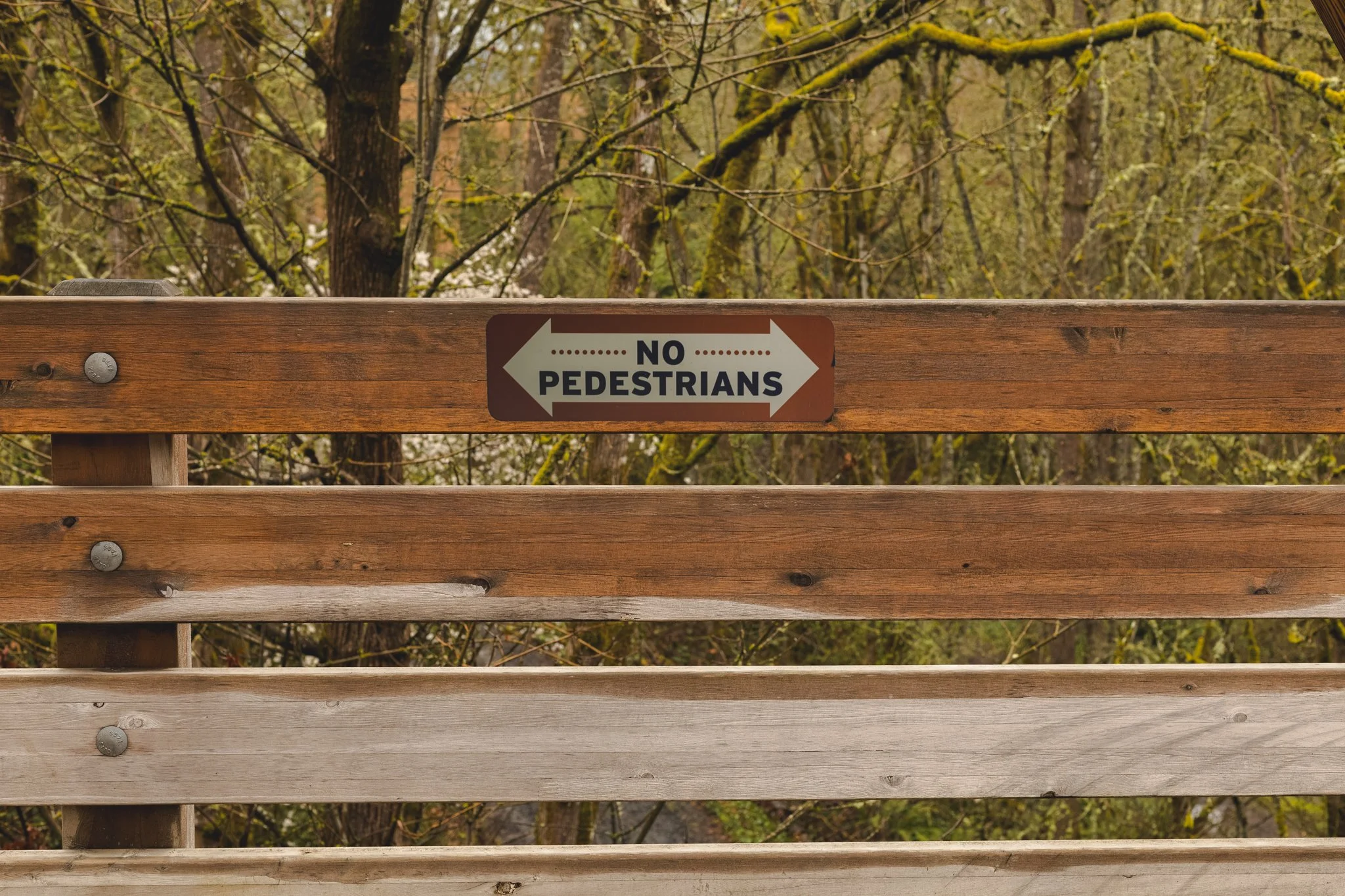
In a recent open meeting with GFU’s newly formed speed enforcement task group S.L.O.W. (Student Locomotion Oversight Workforce), it was learned that pedestrian traffic across the bridge would be banned and scooters would be Crisman Crossing’s exclusive method of travel.
“Those non-scooter people are clogging up the bridge and slowing down overall campus transit by 41%,” explained Willy Wheelson, a member of S.L.O.W. and a friend of McSpeederson. “They’ll have to walk down through the canyon if they’d like to get across.”
When asked if his ownership of a scooter and position as chief overseer on the S.L.O.W. board factored into this decision, Wheelson made no comment.
Starting on April second, pedestrian students can expect to be directed to the canyon trails and anyone found walking slowly will be clocked and fined a heightened $50 fee.