
Insights on ICE
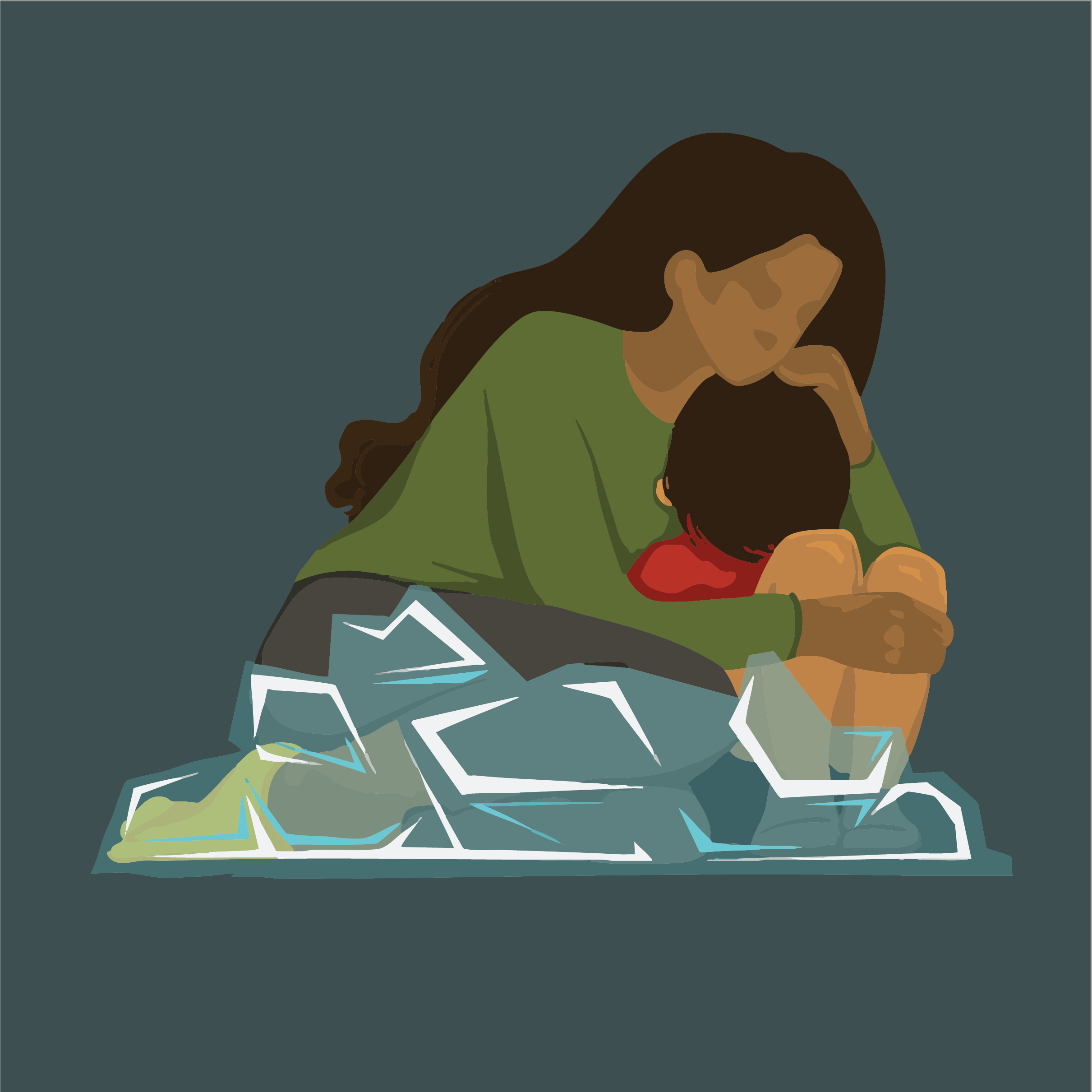
Illustration by Breanna Newburn
Article by Reese Borchert
NEWBERG, Ore. – Open social media and you see it everywhere: the 2016 trend. People have been enjoying the excuse to share pictures of themselves from 10 years ago and reminisce. Despite the quantity of these posts, they pale in comparison to the content regarding recent national events: the death of Renee Good and the intensified conflict between Immigration and Customs Enforcement (ICE) and civilians.
“November was the first time ICE was in the area for a period of time, rather than just passing through,” says a teacher in the Newberg-Dundee School District, who, wishing to remain anonymous, will be referred to as “Teacher.” Although there was talk of ICE long before, the issue was brought “close to home” when two Newberg men were detained over the summer.
Both sources I spoke to claim the intensity of ICE spiked in November. This was the same month a McMinnville high school student was detained and a George Fox University (GFU) student was given the responsibility of transporting her younger sister to middle school. This student, also wishing to remain anonymous, will be referred to as “Student.”
Student’s aunt had recently started driving the younger sister, following the family's decision to transfer school districts to grant additional opportunities to the sister. This new school was outside the local bus route and both parents’ jobs conflicted with drop-off timing, so Student’s aunt took the younger sister to school daily on the route to her job in Portland.
“All of a sudden, this routine got disrupted,” says the Student, a first generation woman attending GFU. Both of Student’s parents obtained citizenship in 2022, but her aunt was undocumented. She was told it would take 30-50 years to process her paperwork.
To avoid subjecting the 13-year-old to an encounter with ICE, the aunt and family decided that an extra stop at the university was necessary for everyone’s safety.
“So then I took her to school, on top of my own classes,” Student says. “This has been a year that I’ve had to lean on God the most.” This circumstance has become a testing of her faith as well as an opportunity to help lead her family in trusting God.
Jan. 19-23 was Serve with Passion Week at GFU. During this week, through various SpiL retreats and service project offerings, Student was reminded that “we are in battle not just against flesh and blood but against evil powers.” She offers Romans 12:21 as a verse that has been anchoring her this year.
Similarly, Teacher, a kindergarten teacher at a Newberg school hopes to overcome evil with good by continuing to provide opportunities that strengthen the community, despite varying comfort levels of families. Teacher has made it their mission to create joyful experiences that bring people together instead of driving them apart.
“I know [a student], just a little kid, who didn’t even get to go trick-or-treating. So I don't know what else families decided not to do that they would [if the situation were] otherwise,” says Teacher. “The biggest fear is for family members. It doesn’t matter the legal status or not–they feel like they’re targets.”
Despite family members being those who feel the most at risk, fear is still felt by children. “My little kindergartners, they just feel the stress of it,” Teacher says. “I’m not sure what they do or do not understand but they feel the stress.”
Families in the community are not the only ones dealing with the situation at hand. “It’s definitely a high concern for the administration,” says Teacher. “We would do anything to keep everybody safe.”
Across the Newberg-Dundee school district, ICE is perceived as a real threat to not just a school day, but the lives of their students. Schools that offer the Dual Language Program feel they would be the first buildings ICE agents would approach. This has been echoed by various families that attend Edwards Elementary, Mountain View Middle, Newberg High and the Woodburn district.
“All of the places that are threatened are just like us,” says Teacher. “Those places never imagined they would be in that position, but they are. So we have to think through, if [ICE visited us], what we would do.”
Although sources claim to have felt the pressure of ICE more directly towards the end of 2025, The New York Times shows in the second graph of this article that total deportations have decreased since the previous four years.
There is a nonprofit titled Unidos Bridging Community whose mission statement says they were established “To foster the reciprocity of knowledge, connections and opportunities among individuals and families of Latin American roots for wellness through health, intergenerational wealth, civic engagement and education.”
Unidos group members have formed a team of “ICE watch” that stations in Newberg and notifies their community if agents or vehicles have been spotted nearby with Facebook posts.
The GFU Student went to their hometown whose demographics are 85% immigrants this past weekend and noticed the anti-ICE flyers. She recalls a time when there were no signs posted in business windows.
“It was like a reality check; a slap in the face of what the reality is outside the GFU campus,” Student says. Within the university, it is natural to become comfortable with daily life and not seek out information about external occurrences.
“If you’re a person living in this country, you should be caring about it,” Student says to other university students who may be unaware. “I want to hear what’s happening to my brothers and sisters in Christ and how they’re affected. Because this is the sad reality of conversations families in the US are having, citizens with their family members.”
Across the United States, the heightened awareness of government corruption has brought many emotions to the forefront. The American dream seems like a reach, either when attaining citizenship or avoiding violence, enacted by both federal officers and criminal immigrants.
Despite these conflicts persisting, Teacher focuses on the issues at hand while finding ways to continue connection during hard times. “Don’t shut down everything just because there’s a threat. We’ve got to be together, or they’ve won,” says Teacher. “So, that's the only win, a community that keeps connecting.”